Are calcium supplements unhealthy?

Are calcium supplements unhealthy?

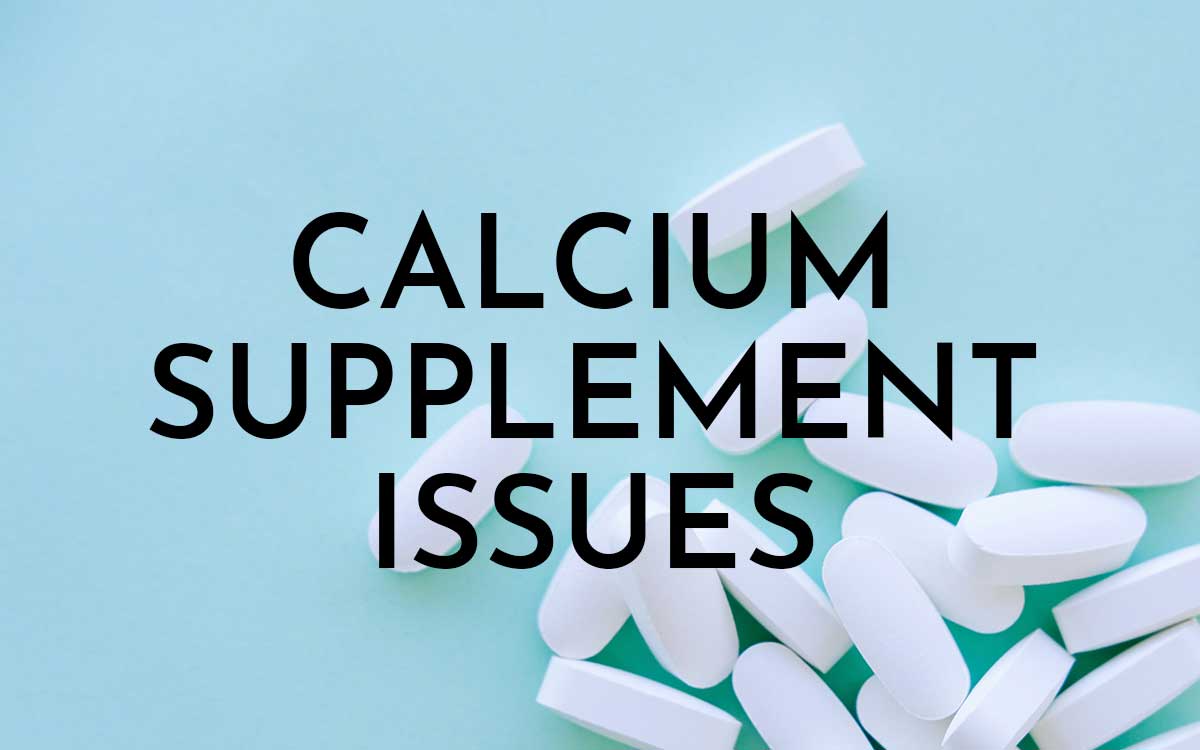
Calcium is normally associated with bone health, but is also essential for the proper functioning of your heart, muscles, and nerves. More is not always better, however. In a 2016 study, researchers found taking calcium supplements may risk heart damage.

“When in the blood in normal quantities, [calcium] helps carry electrical activity to the heart (along with the muscles and brain). However, when too much calcium is in the blood, it can alter the electrical activity of the heart, causing a change in heart rate,” says Brynna Connor, MD, healthcare ambassador at NorthWestPharmacy.com.

While calcium supplements are associated with heart risk, the same risk does not apply to calcium-rich foods—which all doctors agree are an important part of a healthy diet.

For more info and a list of calcium-rich foods, see what Dr. Connor has to say in this article.

hydration
Supplements for menopause

Supplements for menopause

Menopause symptoms can be distressing. While hormone replacement therapy (HRT) is the standard treatment, many women also turn to supplements* to help ease symptoms. So, how effective are supplements? Brynna Connor, MD, of NorthWestPharmacy.com, says supplements such as “vitamin D, vitamin B6, B12, B9 and magnesium … help ease the discomfort of mild to moderate menopause symptoms.” Further, “supplements may also be beneficial for women for whom HRT isn’t an option,” Dr. Connor adds. For more specific information on which supplements are worth trying and which should be avoided altogether, check out what Dr. Connor says in this article.

* Supplements are not FDA-approved and are not proven to cure any medical conditions.

hydration
‘Brain Rot’ and how to reverse it

‘Brain Rot’ and how to reverse it

“Brain rot” is a casual term describing negative effects associated with excessive trivial, unchallenging activities. While not an official medical term, the symptoms are real, including mental sluggishness and lack of focus.

Brynna Connor, MD, of NorthWestPharmacy.com, says that excessive consumption of low-effort content can desensitize our reward circuits. This, Dr. Connor says, can lead to “cognitive atrophy … behavioral conditioning, attention fragmentation, the decline of executive function … irritability and anxiety.”

Luckily, these symptoms can be reversed through healthier forms of mental stimulation. Dr. Connor suggests that the key to undoing brain rot is to exercise sustained attention and executive function. Try replacing screen activities with slower, low-stimulus activities. “It’s important to note that you’ll likely feel bored and/or agitated at the beginning. This is a symptom of neurochemical withdrawal, which can be similar to withdrawal symptoms associated with substance addictions.”

For more tips on reversing the brain rot feeling, see what Dr. Connor has to say in this article.

hydration
Over-the-counter remedies for tendonitis

Over-the-counter remedies for tendonitis

Tendonitis is characterized by soreness and swelling around a joint and tendon. It often occurs “when some harsh or violent strain occurs on a tendon, or when someone [repeatedly] moves their body in a way that it is not used to,” says Brynna Connor, MD, of NorthWestPharmacy.com.

If your pain remains longer than several weeks, you should see a doctor. Otherwise, over-the-counter (OTC) treatments may be sufficient. Some of the best OTC treatments include NSAIDs, topical anti-inflammatory gels, ice wraps, compression therapy, heat therapy, and Epsom salt. When picking an OTC treatment, consider active ingredients and cost. NSAIDS, ice packs, and compression therapy braces are generally inexpensive and highly effective.

For specific product recommendations regarding over-the-counter treatments, take a look at what Dr. Connor says in this article.

hydration
Should your kids be playing in leaf piles?

Should your kids be playing in leaf piles?

While it’s fun for your kids to play in Fall leaf piles, there are some risks to be aware of, including allergens, molds, insects and spiders. While these things can be concerning, it is possible to mitigate these risks without stopping the fun; in this blog, Priscilla Blossom asks Dr. Brynna Connor and several other experts for advice on how to do so.

Cortisol Face
How safe is tap water?

How safe is tap water?

Is it safe to drink tap water? This Fox News article asks Dr. Brynna Connor to weigh in on the risks of drinking unfiltered tap water. According to Connor, as long as it’s from a public water system and there are no boil-water advisories, it is generally safe.

In some cases, Dr. Connor explains, there could be risks, including lead poisoning, hepatitis, nitrate contamination, and fluoride exposure. These risks, Dr, Connor explains, are greater for infants, elderly folks, and those with weakened immune systems.

While these risks are serious, Connor emphasizes the U.S. public water regulations are better than anywhere in the world. Importantly however, these regulations only apply to public water systems, not privately owned wells, which can contain greater contaminants.

One solution is to get a home-filtration system. If you decide to do so, Dr. Cherilyn Davis says, ensure that the system you get only filters out chemicals that are unwanted, as not all chemicals in the water are unhealthy.

Cortisol Face
What are the effects of not wearing a bra?

What are the effects of not wearing a bra?

Does the decision to wear a bra or not affect your breasts? This blog asks experts like Dr. Brynna Connor to get a better understanding of the effects of wearing vs forgoing a bra. 

According to prosthesis specialist Elisa Lawson, wearing a bra may prevent sagging if you are a C cup or larger. On the other hand, French scientist Jean Denis Rouillon suggested in 2013 that bras may increase sagging. Headlines about this “15-year-long study” by Rouillon blew up in 2013, however, these articles all cite a radio interview with Rouillon, rather than the study itself, which was in preliminary stages (Reuters) and does not appear to have ever been published.

According to Dr. Brynna Connor, not wearing a bra may help increase muscle tone by “forc[ing] the muscles in your chest and back to work harder to support your breasts.” Further, going braless on occasion could be healthy for your skin. If a bra does not fit properly, it “can cause sweat to build up underneath the breast area, which can cause bacterial or fungal infections,” as well as chafing.

In short, it may be healthier for your skin if you do not wear a bra 24×7. But, there is no reason to avoid bras if you are comfortable wearing them, and no reason to wear one if you find them uncomfortable. If you choose to wear a bra, choose one that has a proper fit.

Cortisol Face
Are you taking pills correctly?

Are you taking pills correctly?

In this blog post, Priscilla Blossom talks to Brynna Connor and other medical experts about the most effective ways of taking pill medications.

Should I take my pills with food?

While some pills should be taken with food, others are meant to be consumed on an empty stomach. It is important to check the instructions for each medication. (Be aware that some foods and drinks, such as dairy products or citrus fruits, may cause medication to be less effective.)

Should I take my pills with water?

Yes. Water not only makes it easier to take the pill, but helps absorb the medication so that it will be more effective.

If you are still struggling, try adjusting your posture. It may seem natural to move your head up, but this will make things more difficult. Move your head slightly forwards when taking a pill – this helps open your esophagus, making it easier to swallow.

What about aspirin, ibuprofen and acetaminophen?

Each of these drugs have their distinct purposes. While aspirin and ibuprofen are more effective for inflammatory symptoms, such as menstrual cramps or arthritis, some people have trouble tolerating these medications and may opt for acetaminophen (Tylonal), which is less irritating to the stomach lining.

It is important to check the dosing guidelines for each medication, as these can vary.

At-home nasal vaccine vs. flu shot: Which is right for you?

At-home nasal vaccine vs. flu shot: Which is right for you?

Getting a flu shot can help prevent or reduce severity of the illness. But, for those who are averse to needles and offices, there is a new option.

The FluMist nasal flu vaccine has been approved for individuals ages 2-49. The nasal flu vaccine will be fully covered by insurance, just like the shot. Unlike the shot, it can be self-administered at home. With a doctor’s prescription, the at-home nasal vaccine can be ordered from the pharmacy, and should be available around fall of 2025. 

What is the difference between the shot and nasal flu vaccine?

In this msn.com blog, Dr. Brynna Connor explains “While the flu shot is made up of inactive viruses, the at-home nasal flu vaccine is made up of live but weakened viruses.” Neither are capable of causing the flu. Both vaccines last slightly over six months, so Dr. Connor recommends taking the nasal spray (or the shot) annually.

To maximize effectiveness, Dr. Connor recommends self-administering the flumist as soon as possible (one spray in each nostril). If you cannot, then store in a refrigerator (35-46° F) and use prior to the expiration date.

How to avoid catching the stomach bug

How to avoid catching the stomach bug

The stomach bug, also known as Norovirus, is highly contagious; however, it is possible to avoid contamination, even from someone in close proximity. That is why it is important to know how this virus spreads, and what kills it. In this article, Dr. Brynna Connor and other experts will tell you what you need to know to avoid catching the stomach bug if your child brings it home.

First, it is important to know if the child or person you’re living with has the bug, or food poisoning. The biggest indicator is how quickly after exposure the symptoms came on. While food-poisoning symptoms can occur after only several hours, Norovirus takes 24-48 hours.

How does it spread?

It spreads from germs in the vomit or feces of the contagious child. Since the virus can survive on surfaces for a long time, it can easily be transmitted.

Unlike something like Covid19, the virus is not easily spread through sneezing and talking. Masking will not prevent you from getting sick. 

How to avoid catching the bug:

  1. Frequently wash your hands with soap and water. Do not rely on hand sanitizer, as it is less effective at killing Norovirus.
  2. Bleach surfaces – norovirus is resistant to many non-bleach disinfectants. Use disposable gloves when doing this.
  3. Wash everything that is washable – toss everything else
  4. Have a designated hand/face towel for the sick child
  5. Avoid sharing plates, silverware, and food – have a dedicated cup for the sick child.
  6. Close the toilet lid when flushing.
  7. Be careful with diapers – use disposable gloves

Pin It on Pinterest